Shipped interfaces, a knowledge app on real data, and the engineering craft between them — one token layer, one thread of ownership.
Personal / Studio
Product-grade UI and a production RAG pipeline — parallel problems that taught the same full-stack muscle.
A public portfolio surface plus a working assistant over messy PDFs — both fed from the same motion and type discipline.
Each experiment tightened the loop: design tokens, React surfaces, middleware, and how they meet in production.
Chapter 01
.ARK Studio
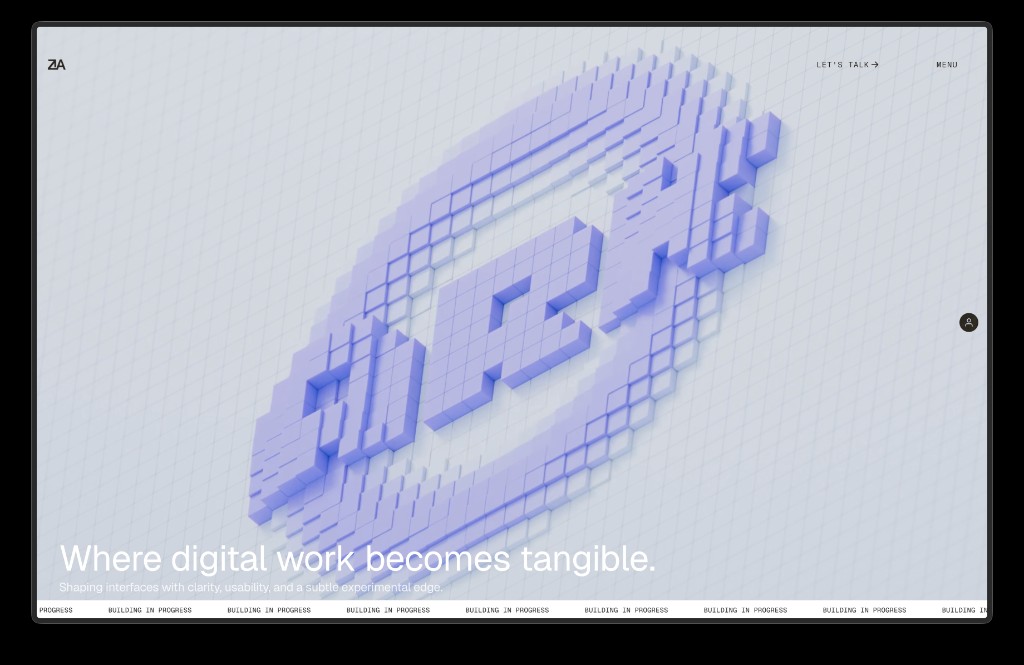
.ARK is a digital design studio built like a system: precise, modular, and cinematic. The name comes from the .ark file format—a container that bundles structure, assets, and logic into one coherent unit.
Digital Design Language v2.0
Aa
Geist Sans
Display / Body
Ag
Geist Mono
Code / UI
The studio needed a face that reflected its internal logic. I built a live agency site that serves as both a portfolio and a capability statement. It uses the same underlying design tokens as the rest of the ecosystem, ensuring visual consistency across all touchpoints.
The Logic Engine
Chapter 02
Transforming a “clusterfuck” of physical PDF documentation into a structured, interactive digital assistant. The goal was to modernize the practice’s knowledge base without disrupting their existing workflows.
The core of this system is a secure bridge between unstructured data and a conversational interface. We utilize AI not just for text generation, but for structural parsing.
Vector Data Parsing: PDFs are ingested and chunked into vector embeddings, allowing for semantic search rather than just keyword matching.
Secure Backend Bridge: A Node.js middleware layer sits between the client and the LLM provider, managing API keys and enforcing rate limits. This ensures that sensitive medical data structure is handled compliantly.
Persona Engineering: The “medical persona” isn’t a prompt trick; it’s a fine-tuned system instruction set that forces the model to cite its sources from the uploaded PDF knowledge base.
> DATA_TRANSFORMATION_PIPELINE v1.0
A functional frontend where patients or staff can interact with a knowledge base that was previously trapped in paper form.
View Live SystemOne coherent build habit across a shipped interface layer and a RAG-backed medical knowledge app — same tokens, same ownership.
A live portfolio surface and a working RAG medical assistant on top of a vector DB — both using the same tokens, type scale, and motion language.
Turned 'AI-assisted' from a buzzword into a measurable workflow: structured prompts, repeatable components and a data layer that stays owned by the practice, not the model vendor.
End-to-end ownership is the real differentiator. When design, systems thinking and engineering share one head, the pipeline stops leaking detail between roles.
Next Project
